
Your inventory says six bottles of a 2020 Rioja. The shelf holds four. Changing six to four is quick, but it can create a second error if the other two bottles are in the kitchen cooler. Start with that one wine and trace the difference before changing the total.
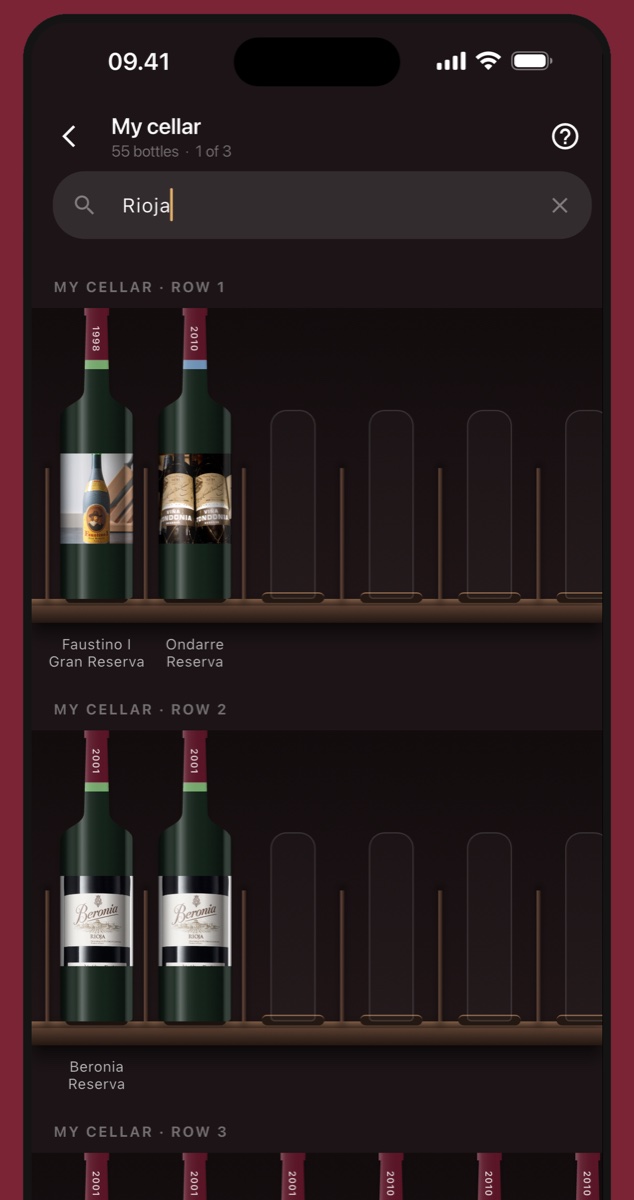
What exactly is wrong: the total or the location?
Write down the recorded count and the physical count for the affected shelf. Keep bottles in place during the check. If someone takes one, note it separately so the count has a clear starting point.
Search for the producer and wine name without a vintage filter. Look at every location assigned to it, including cases and overflow boxes. A bottle on the wrong shelf needs a location correction. It does not need to disappear from the collection.
Check these four causes in order
- An unrecorded move. Check the cooler, serving area and shelves next to the recorded location. Compare the vintage on the bottle, not just the familiar label design.
- A separate record for the same wine. Search by producer alone. A shortened name or spelling difference may hide a second entry. Compare vintage and bottle size before combining anything.
- A different vintage or size. A 2019 bottle does not replace a missing 2020, and a magnum is one bottle. Count each group separately, even when the front labels look alike.
- A bottle that left the house. Check recent dinners, gifts and returns. A gift changes the stock count but should not create a tasting note for wine you did not drink.
A six-bottle example
Suppose Rack A lists six bottles, but you find four. The kitchen cooler contains one matching bottle. You also find a note that one bottle went to a friend on Saturday.
The collection now contains five bottles: four in Rack A and one in the cooler. Record the move of one bottle and the departure of one gift. Reducing Rack A to four without recording the cooler bottle would undercount the collection. Leaving the total at six would keep the gifted bottle in stock.
In a spreadsheet or correction note, write: "September 9: Rack A 4, kitchen cooler 1. One bottle gifted September 5. Physical total 5." That is enough to explain the change at the next check.
What if you cannot explain the missing bottle?
Keep the fact separate from the guess. Record the physical quantity and a note such as "Count corrected from 6 to 5 on September 9; reason unknown." Do not mark it as opened yesterday just to make the numbers agree. A made-up opening date makes the drinking history less reliable.
Before deleting or combining records, preserve the existing notes and photos. If the tool has no correction field, keep a short dated note alongside the inventory. See the backup guide before making a large set of changes.
How much of the cellar should you recount?
Stop when the affected wine and its locations agree. One unexplained bottle does not require a full cellar reset. Expand to the whole rack if several wines are wrong there. Recount the collection if errors appear across unrelated locations or you have recently moved the whole cellar.
For the next few openings, update the count when the bottle leaves storage. If the mismatch returns, check that routine first. The shared cellar guide covers a simple handoff when more than one person takes bottles.