
You recognize a label in a shop but cannot remember whether you finished the last bottle or still have half a case. The label photo helps identify it. The quantity, outstanding orders and last opening note tell you whether buying more makes sense.
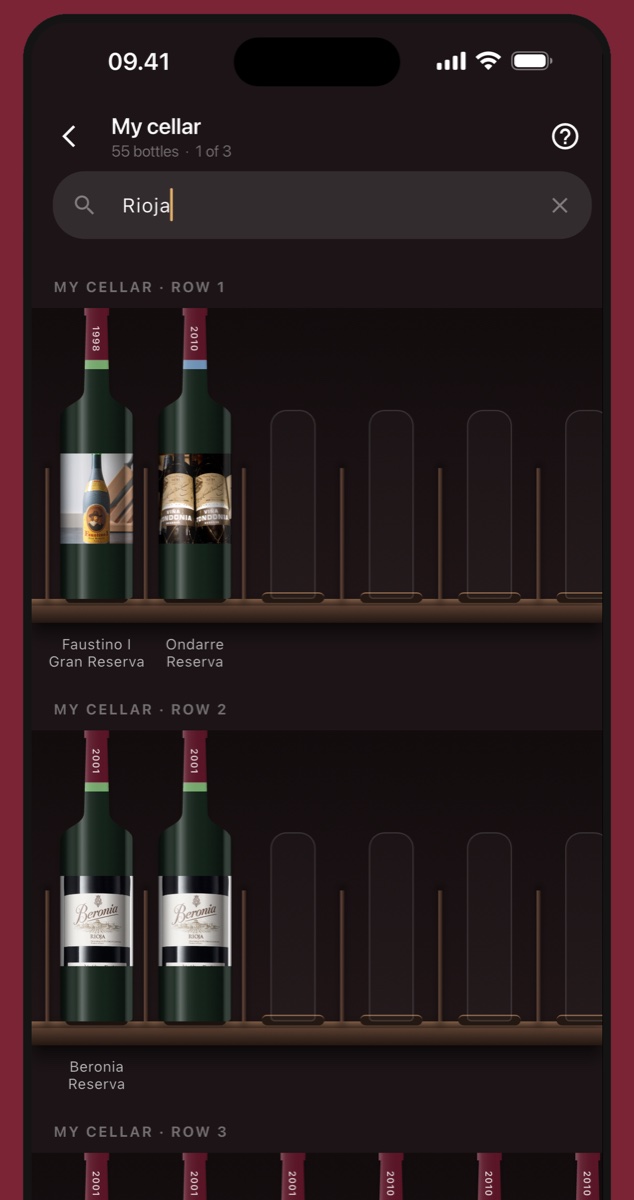
Are you looking at the same wine?
Start with the producer, then compare the wine name, vintage and bottle size. A familiar label does not establish that all four match. If a shop abbreviates the name, use the label photo or the full product description to check it.
Look at both current stock and finished bottles if your inventory keeps them separately. A wine can be familiar because you drank it last year, not because any remains. If the vintage differs, treat the previous tasting note as context rather than a review of the bottle in front of you.
Count stock and incoming orders separately
Search every storage location. Include bottles left in cases and any moved into a cooler. Then check recent order confirmations for the same wine. Wine in transit should stay separate from physical stock, but it still matters to a buying decision.
If a quantity looks doubtful, mark it for checking before placing a large order. A five-minute shelf check is more useful than guessing whether the app is one or six bottles behind.
Work out the quantity before reading the offer
Suppose you want six bottles available for a series of dinners. You own four, but two are already set aside as gifts. Another two are on an outstanding order. That leaves two available now and two expected. To reach six, you need two more, assuming the delivery arrives before the dinners.
Write the calculation as: target 6, less available stock 2, less expected delivery 2, equals 2 to buy. If the delivery date is uncertain, resolve that separately. Do not quietly count incoming bottles as already on the shelf.
This is a planning example, not a recommended amount to keep or drink. Use your own occasion, storage space and budget. If you have no particular use for more bottles, keeping the wine on a wish list is a valid decision.
Read the decision in your last note
A score alone may not explain whether you wanted another bottle. Look for the practical part of the note: buy again, try a single bottle of the next vintage, or pass. Also check whether the note described a specific faulty bottle rather than the wine in general.
If the note only says "good", make the next one more useful. Add what you liked and whether you would pay the same price again. The tasting-note guide gives a short format you can reuse.
Save enough information to finish the decision later
When you cannot check the cellar from the shop, save the producer, wine, vintage, size, price and shop name. A clear photo of the bottle and price label can cover most of that. Put it in a buying list, not the inventory of bottles owned.
After ordering, note the quantity and order number in the pending list. When it arrives, check the delivery, add the received bottles to stock and close the matching pending entry. Leaving that entry open makes the next buying check count the same bottles twice.